Why?
So, I've been working on a fun side project (a degenerate Tamagotchi arc lighter).
Given that this is something that I plan to produce quite a few of,
I needed to do some research to figure out how to not accidentally kill
myself and the people around me.
While I am technically an electrical engineer, I would hardly say that I'm fully qualified to talk about this, since I mostly work with
radio frequency systems (pretty different btw). So, PLEASE PLEASE read from other sources and talk to people BEFORE you
decide to play with high voltage. And PLEASE learn the fundamentals of circuits, and know HOW to apply the fundamentals to keep yourself safe.
You SHOULD be just as curious about high voltage safety, and YOU should be knowledgable enough to know what rules apply for what situations, and what rules apply to different situations.
I'm a big proponent of risk mitigation. I can say "don't play with high voltage", but like abstinence only sex-ed,
this will not stop anyone, and the failure to provide safe ways of engagement will lead to more harm than good.
The TLDRs of HV: Rules of Thumb
While I highly recommend you read this page (and supplement this reading with other sources), I know that not everyone will. If anything, I want you to walk away with this.
- ALWAYS assume the circuit is hot until you have tested it, and engage with it like it is a venomous snake, because high voltage arcs CAN bite you.
- Safely discharge your circuit before working with it (ie soldering, touching, etc). How do you do this safely?
- Find an appropriately sized resistor (power resistor). The resistance should be scaled for the current you want, and the power rating should be for the expected power to dissipate. You should use this resistor in conjunction with a tool to safely discharge current to ground.
- DO NOT USE A WIRE OR SCREW DRIVER. You can melt the metal (bad), but you also might not even fully discharge the circuit if the wire melts before discharge is complete! (really bad)
- Ensure that the voltage rating for your tool insulation matches the voltage you are working with. Most pliers / tools are only good up to 1KV, and you may have to make your own discharge tools / pokey stick, or cough up some money to buy proper tools. You MUST do the work to figure out whether or not you need to buy or make special tools, and how to make those tools safely.
- Make use of bleeder resistors when applicable in your projects, and store large capacitors with shorted terminals
- One hand rule: keep one hand isolated from ground (pocket, lap, etc), and use the other hand to work with the active circuit. This is to limit the likelihood that the current will flow from one hand to the other, and across your heart.
- Know your voltage, current, and frequency. This will determine the mode of danger, your margin for error, as well as the insulation required to keep yourself safe.
- A small Tesla coil is unlikely to burn you or stop your heart -- the frequency is too high and the arcs are considered "cold" due to the low current. Expect pain and mild skin burns.
- A neon sign transformer is riskier -- typically between 2kv and 15kv, sometimes with frequencies at 60 hz or ~ 20KHz (depending on how old it is). Expect formidable shocks, burns, and cardiac arrest.
- A microwave transformer Lichtenberg wood burner setup will kill you if you get shocked. In fact, touching the piece of burnt wood can kill you, since the voltage drop is still 2Kv, and the wood is conducting enough current for it to catch on fire. Expect your heart to stop and severe electrical burns. There is no margin for error.
- Work with a buddy if possible. Ensure this buddy knows how to de-escalate the situation in the case of shock
- Typically, this involves de-energizing the shocking device if possible (so, unplugging the power supply).
- This buddy should NOT try to grab you or touch you WITHOUT first de-energizing the system/circuit. The last thing the paramedics want is two bodies to clean up.
- CPR should be administered once there are no more shock risks. If you are curious about learning CPR, click here to find a class.
- In the case that the circuit can not be turned off or de-energized, using a non-conductive stick to shove your electrified body can prevent further shock.
- Don't be wet. Seriously. Wet skin has a significantly lower resistance than dry skin.
- You can reduce the risk of cardiac or tetany (involuntary contractions due to HV) by increasing the frequency. Increase the frequency of your projects when possible. ELECTRICAL BURNS ARE STILL A SERIOUS RISK. YOU CAN NECROSE YOUR ORGANS AND DIE PAINFULLY. SUB GHZ FREQUENCIES STILL PENETRATE TISSUE QUITE EASILY.
- Follow professional safety standards.
Why Is High Voltage So Dangerous?
You've probably heard the saying "voltage doesn't kill, current kills", which is kinda true, but omits some details. How electricity kills you is complicated, but also not that complicated when you treat the human body as a variable resistor with finicky requirements, such as love and fulfillment and not being subjected to 100W of power over 1 ms.
Ohm's law? Nah, Ohm's suggestion at high voltages
You're probably mildly familiar with Ohm's law V=IR, and Kirchoff's voltage and current laws if you've taken a circuits class. They're pretty snazzy models that 1: describe the relationship between voltage current and resistance, 2: describe currents as splitting and rejoining when nodes split or rejoin (charge conservation), and 3: describe that the net voltage drop around a circuit is 0 (conservation of energy).
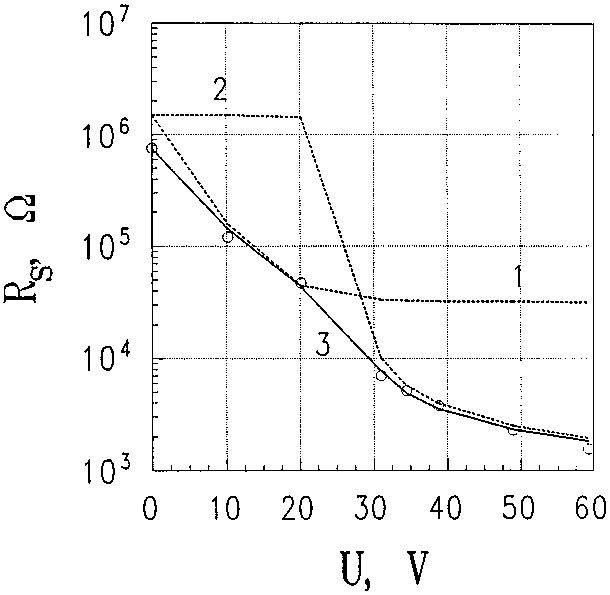 Trace 1 represents the resistance of the deeper skin layers, trace 2 represents the resistance of the top skin layers. This is a bit of an
oversimplification, I recommend reading this for more info.
Let's take a look at sticking a fork into a wall outlet as a toy example.
Why would this be considered a bad move? Depending on where you live, the power leaving
outlets is somewhere at 120, 100, and 240 volts, which current somewhere between 5 - 16 amps.
If your body was super special and perfect and had a resistance of 1MOhm, with the worst case scenario voltage drop
of 240, you'd have about 0.24mA of current flowing through you (You'd get a little toasty from resistive heating, but your heart is unlikely to stop).
But human flesh is messy--lots of layers, lots of ions, and lots of weird electrical properties. It's essentially a voltage controlled resistor--with a resistance of around
1Mohm to 100kohm nominally (dry, 0V), around 1kohm at 60V, and around 500 Ohms around 500V. So for the toy fork-in-the-wall example, the actual flowing current is
somewhere around 240 mA, which is more than enough to stop your heart and cause muscle contractions that prevent you from letting go.
Human flesh isn't the only exception--most materials become conductors at high enough voltages. The voltage at which a material starts to freely conduct electricity is called the breakdown voltage.
This is one of the biggest reasons why high voltage is so dangerous: the whole got dang world is a wire, and the flow of electricity can become unpredictable. The other reason why high voltage is so dangerous
again goes back to ohms law -- higher voltage allows for more current to flow through a fixed resistance.
Useful Resources
- Capacitor Discharging
- Tesla Coil Safety
- Tesla coils again, but for performances (kinda neat)
- High Voltage Forum
- Electrical Glove Ratings
- Arc flash ppe (dear god you should not be playing anything this powerful)
- Neon Sign Transformers
- Neon sign transformer safety circuits
- text
- text
- text
- text
- text
- text
Regimes of Danger: Da <3
I've found it to be quite useful to break down exactly how high voltage would theoretically kill me.
I <3 my <3
I think its worth going over the old ticker in some detail, partially
because it is endlessly fascinating, but mostly because understanding cardiac
action potentials lets you know when high voltage would kill you.
 An action potential is just the funny name for the rapid change in electric charge (polarization)
across a cell membrane, due to funny proteins called calcium or potassium channels
that are stuck within the cell membrane. Your cardiac muscles need electricity / cell membrane
depolarization to to contract correctly, and these cardiac muscles need coordinated action potentials
in order to successfully contract in a way that allows your heart to pump blood.
So there are these two little cutie patootie meatballs in your heart, called the Sinoatrial Node (SA) and the
Atrioventricular Node (AV) that are made of these silly little cells called pacemaker cells.
As the name implies, they keep the pace. The SA node talks to the VA node (in the process causing
the atrium to contract), who takes a brief pause, and talks to the ventricles (in the process, causing contractions.)
This electrical timing like for realsies matters a lot for two reasons. 1.) Mechanically, your atrial valve need to open to actually
get the blood into your ventricles, which then need to contract to push the blood to the rest of your
body, and 2.) different parts of the heart discharge at different times (delayed),
and will finish recharging at a different times. There is a refractory period for different parts
of the heart, and its generally considered by many to be unwise and kinda shitty to begin depolarization when parts
of the heart are still repolarizing.
I <3 my <3: Playing A game of Cardiac I2C Chicken with God
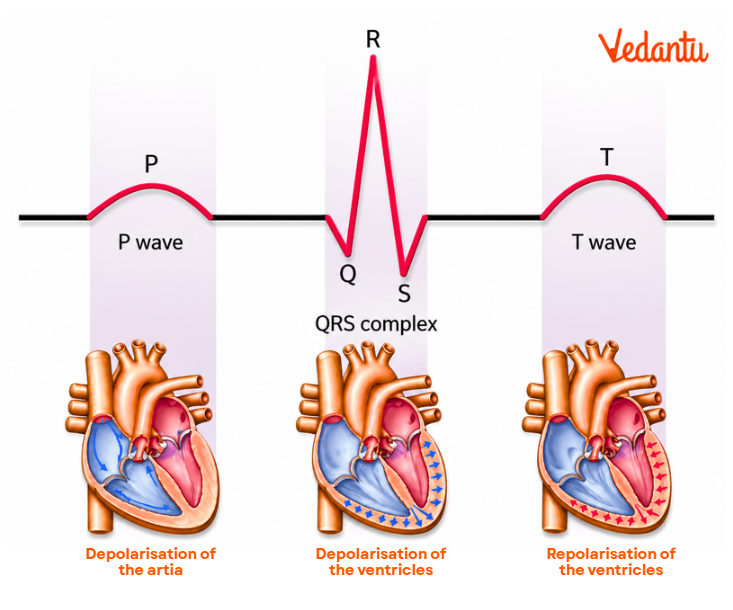 So the old ticker protocol is very time sensitive, but there are parts of it that are more time sensitive than others.
The T wave period (~200ms) is actually the sketchiest part of the cardiac cycle, since its the period when the ventricles
(pumpy big boys) are repolarizing. Now, since the ventricular action potential propagates down the center and around the edges,
there's a slight delay between the depolarization and repolarization ventricular cardiac cells.
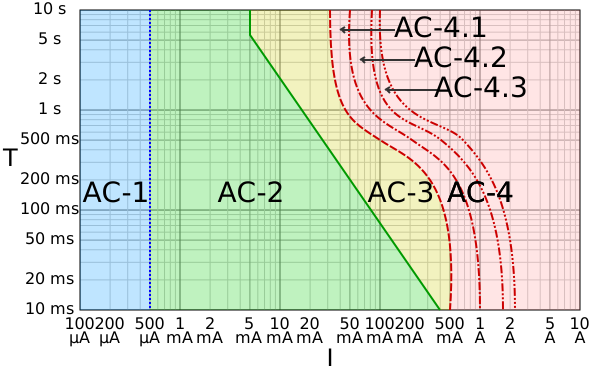 Here is a helpful guide for risk of cardiac arrest vs current and exposure time courtesy of IEC-60479-1
During the T wave, any unintentional electrical stimulation, either from an arrhythmia,
defect, or fork in an outlet (>75 mA, but even as low as 40 mA ), can cause premature contraction of only the repolarized part of the ventricle.
Again, this is generally considered by many to be bad, mostly because you need a controlled contraction to pump blood,
and also this premature contraction can very very quickly spiral into and unstable mess, such as ventricular fibrilation,
torsades de pointes (not to be confused with angine de poitrine
dayum khn u fine ), and sudden cardiac death. While still bad, unintentional electrical stimulation during the p-wave (beginning of cardiac
cycle), is generally not as bad, since disruption to the atrium is less immediately life threatening. (The symptoms of Atrial fibrillation are
typically stoke, shortness of breath, chest pain; the symptoms of ventricular fibrilation are loss of consciousness, collapsing, and straight up dying.)
I <3 my <3: High Freakuency
As a silver lining, high frequency electricity (>100khz) generally does not interact with
the heart in the same way. So while high voltages > 100khz are not considered safe, they probably
won't stop your heart, but can kill you in different ways.
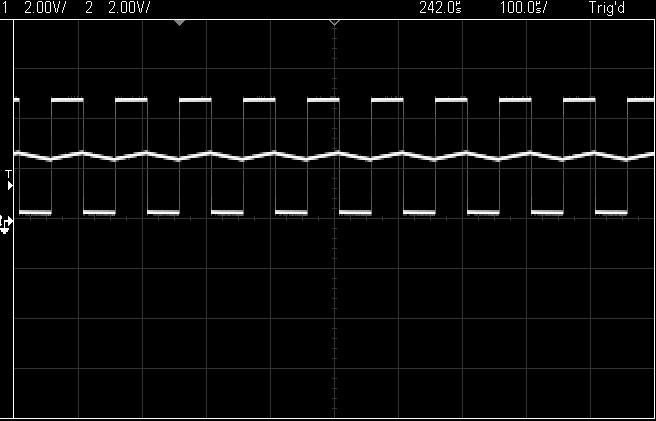 The easiest way to understand why high frequency is less impactful is to think of the cell membranes
as fat capacitors with a low frequency response. When you pass a high frequency signal through a large capacitor,
the high frequency signal gets smoothed out by the long time constants, causing the resulting signal to be pretty close to 0.
Your cardiac cells are pretty doing that. If you ask the internet, it will say "the skin effect",
but 100khz is too low of a frequency for that to really apply, you'd have to be in high MHz to GHz ranges
for that to dominate.
Don't think that you are safe from HV by only playing with high frequency signals either -- you can still
easily accidentally roast your internal organs.
Sauce
Regimes of Danger: Cooked Hotdog
Regimes of Danger: Du u evn lift bru?
Wowie pretty crazy that the heart has depolarization and repolarization timing requirements. Golly Geez, sure there isn't anything else that has similar timing requirements.